Tricase Porto, with the green of stately homes and the woods that cover the surrounding hills, seems to appear in a rash on the Adriatic coast. The place was known to mariners since the fifteenth century; the harbor basin opens into a small natural inlet, later enlarged and protected during the 18th and 19th centuries.
To characterize the cultural aspect of the locality is the Magna Grecia Mare Association, whose aim is to safeguard the history of the port community and all the ancient maritime arts.
Going up the slopes that surround it, you reach the center of the village. Along the way you meet the seventeenth-century church of S. Maria di Costantinopoli, also known as "church of the devils"; there are numerous popular stories fueled by its atypical octagonal plan and its hypothetical construction carried out in one night by the devil. In reality the church was built by the Marquis della Gattinara and consecrated in 1685.
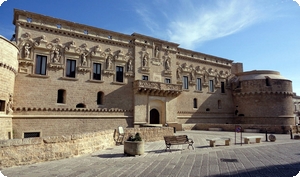
When in the center of town, on the old square facing the main church, the parish church dedicated to the Nativity of the Virgin Mary and the palace of the Princes Gallone. The Orlandi palace which belonged to Celestino and Ferdinando Maria, both Tricasian bishops, is fascinating. No less important are the Princely Palace and the Dominican Church; for centuries the palace played the role of defensive structure and representation of the feudal power of the Gallone.
Very flourishing between the eighteenth and nineteenth centuries was the art of tanning skins, characterized by the use of acorns (very rich in tannic acid) during processing. These were harvested from the Vallonea oak, one of the longest-lived trees in the entire national territory, strong in its estimated 900 years of age and capable of surviving the passage of populations and climate change.